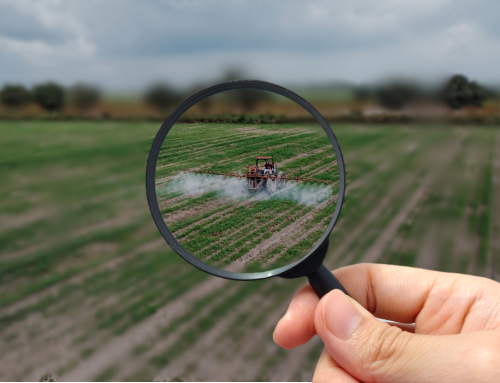
An inflatable pesticides container the size of a 5-story apartment block calls for the phase out of Highly Hazardous Pesticides (HHPs) outside the venue of the COP30 climate negotiations in Belem, Brazil. It aims to highlight their role in heating the planet and poisoning the future.
It serves to remind climate leaders that pesticides are derived from petrochemicals and underpin destructive agriculture and food systems that generate a third of global carbon emissions. Pesticides harm soil microorganisms, undermining soil fertility and soil carbon storage. International climate negotiations have failed to tackle this problem, which is getting worse in most parts of the world.
Brazil has a particularly outsized pesticide problem. The country is the largest consumer of pesticides in the world, around half of which are HHPs. These products are largely manufactured in Europe, where many of them are banned from use, as well as the US and China.
Pesticides are not only linked to climate change, but also to catastrophic loss of biodiversity and chemical pollution. By taking strong action on HHPs, decision makers could secure vital progress on all three global crises.
Most parties to the UNFCCC have signed the COP28 UAE Declaration on Food and Agriculture, pledging to integrate action on agriculture and food into national climate and biodiversity plans by the time of COP30 in Belem. The inflatable sends a strong message that this commitment requires immediate action, and comes as the PAN International’s Agroecology Working Group publish 11 case studies from Africa, Asia, and Latin America on how agroecological farming systems provide a robust set of innovative, farmer-friendly, and climate-resilient solutions to the environmental, social and economic pressures facing agriculture today.
The inflatable is organized by the International Pesticide Standard Alliance (IPSA Global), in which PAN International is a founding partner.
For policy makers: a briefing on the benefits of tackling HHPs to meet commitments on climate, biodiversity and pollution.