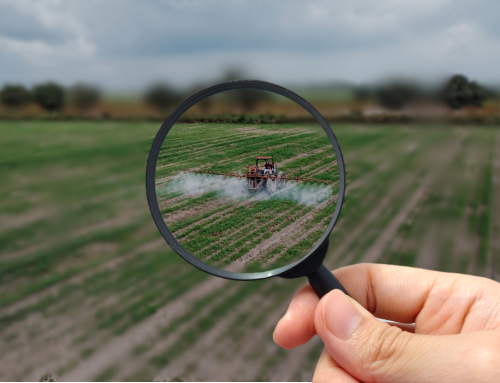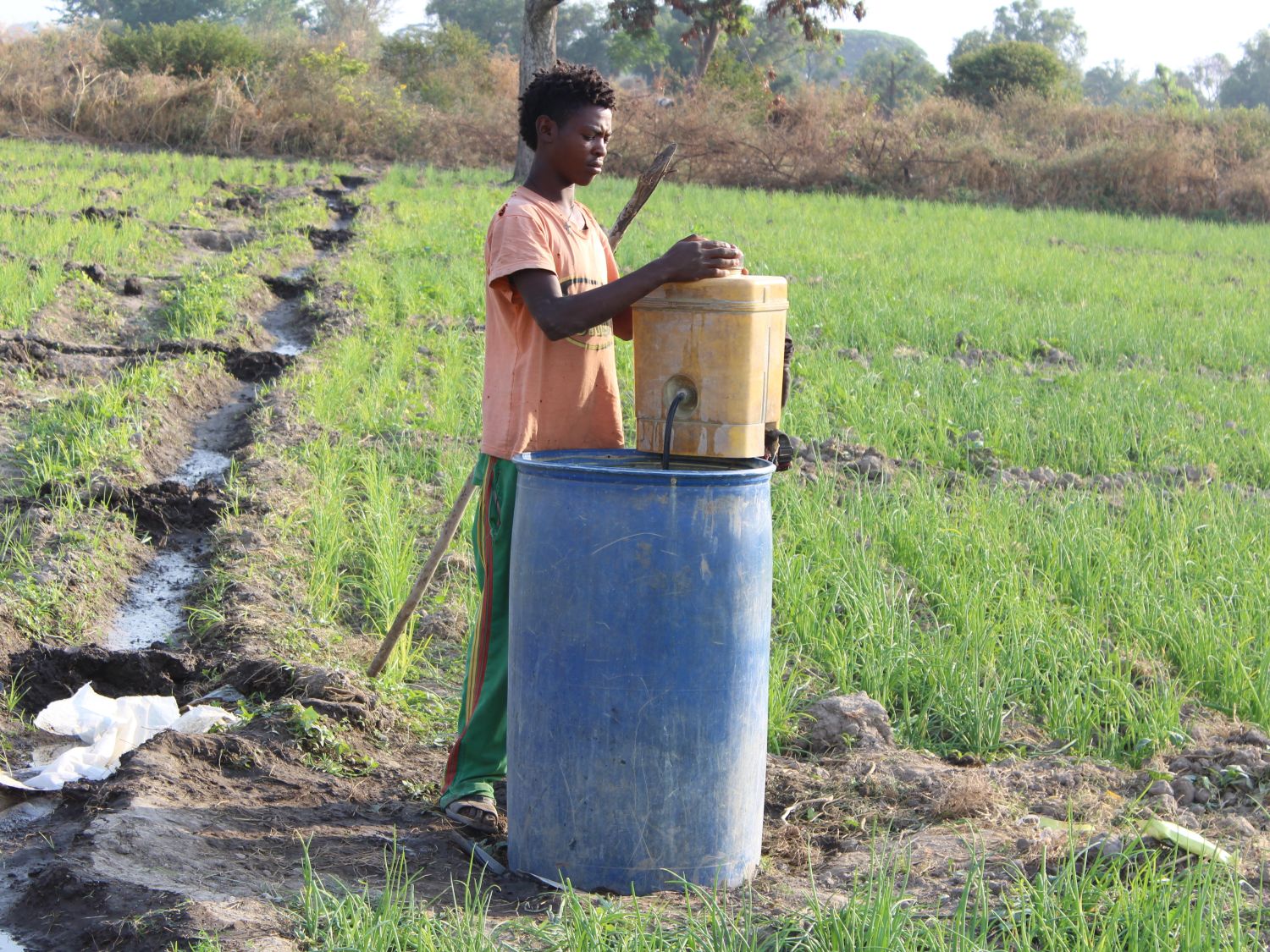
Farmworkers around the world are being put at risk due to the use of paraquat, a highly toxic herbicide (weedkiller). We’re calling on the UK’s second largest supermarket, Sainsbury’s, to end the use of paraquat in its global supply chains.
Paraquat is responsible for poisoning thousands of farmworkers around the world. Repeated long-term exposure to paraquat has also been linked to chronic health conditions, most notably Parkinson’s disease.
In addition to these human health impacts, paraquat is harmful to the environment posing serious risks to both aquatic and terrestrial ecosystems.
As a result, over 70 countries around the world have banned paraquat. Despite the UK banning this herbicide in 2007, Sainsbury’s continues to allow it to be used in its global supply chains. This means that farmers and farmworkers who grow our food in other parts of the world, and the rural communities that live nearby, are still being exposed to the effects of this toxic chemical.
“We banned paraquat nearly 20 years ago to protect UK farmers and wildlife. And yet, we continue to export the horrendous impacts onto farmers and communities around the world. Farmers in the EU, UK and beyond have thrived for almost two decades without paraquat. It’s high time that Sainsbury’s put people and planet first by banning this toxic chemical.”
Sarah Compson, Head of Policy and Campaigns at PAN UK.
What are we doing?
Five UK supermarkets have already taken action on paraquat in their fresh produce supply chains by adding it to their banned or phase out lists. Tesco, the supermarket with the UK’s largest market share, was the most recent supermarket to commit to a ban in March this year, bringing the number up to six once they’ve acted on it.
We’re calling on Sainsbury’s, the UK’s second biggest supermarket, to do the same.
What can you do?
- Share this post on social media, tag @Sainsburys and use the hashtag #SainsburysBanParaquat
- Find us on social media @pesticideactionnetworkuk, share our posts, comment, tag @Sainsburys and use the hashtag #SainsburysBanParaquat
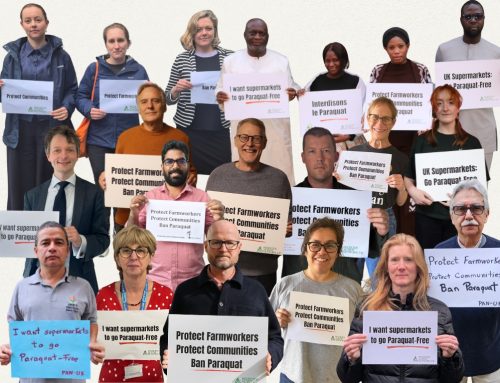
- Or print out our poster, take a photo of yourself, and share to social media, tagging @Sainsburys and using the hashtag #SainsburysBanParaquat.

Frequently Asked Questions:
Paraquat is a contact herbicide which means it only affects areas of the plant it is directly sprayed on or touches. It can’t move through or stay in the plant whilst it matures or grows new edible parts. This reduces the exposure risk to consumers, however, paraquat residues have been detected in crops where application occurs near harvest.
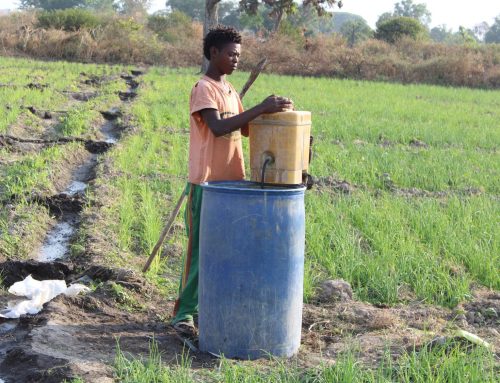
Another human health impact lies with the farm workers who apply it and the communities that live near agricultural land where it’s sprayed. This exposure to paraquat, whether inhaled or absorbed through the skin, can lead to severe poisoning cases among farmworkers, and repeated exposure can cause chronic health conditions like Parkinson’s Disease.
Paraquat is responsible for causing the deaths of thousands of farm workers globally since it was brought onto the market in 1962, under the name Gramoxone. In acute poisoning cases people can experience abdominal pain, vomiting, gastro-intestinal bleeding, comas and seizures.
Repeated, long-term exposure to paraquat even at low levels can lead to a number of chronic health conditions to respiratory systems, kidneys, liver, and most notably, paraquat has been strongly associated with the development of Parkinson’s Disease.
Paraquat causes harmful environmental impacts. It is toxic to mammals, birds, and aquatic invertebrates and because it is very persistent in the environment when it binds to soil or sediment, it can cause soil and water pollution, posing significant risks to aquatic and terrestrial ecosystems, with residues that can ultimately enter the food chain.
Read more about how paraquat degrades and contaminates environments.
Due to its high toxicity and lack of an effective treatment, it can cause many health issues and human fatalities each year from both accidental exposure and self-harm. Ingestion of just a small amount of paraquat can kill, and more than 70% of self-poisonings result in death.
Paraquat is applied for weed control, to trigger crops to shed leaves (defoliant), to speed up crop maturation, as well as to dry out plants to prepare fields for the next crop (desiccant). It’s used on a range of crops, such as corn, soybeans, bananas, cotton, pineapples, orchard crops, and more.
Example uses of paraquat across various crops:
- on corn, soybeans and rice as pre-planting weed control
- on bananas, coffee, palm oil, orchard crops and tea as post-emergent weed control
- on cotton and potatoes as a pre-harvest defoliant
- on soybeans as a pre-harvest desiccant
- on pineapples and soybeans as a post-harvest desiccant
The most common use of paraquat we hear about from UK supermarkets is on pineapples in Costa Rica. It is used on pineapple crops after the fruit has been harvested to speed up the decomposition of waste foliage to prevent stable fly, a livestock pest, from laying eggs and using it as a breeding site.
Over 70 countries around the world, including the UK and the EU in 2007, have banned the use of paraquat due to its impacts on human and environmental health.
Syngenta and its predecessors have been manufacturing and exporting paraquat for use in other countries from its UK factory in Huddersfield since 1962. In March 2026, Syngenta announced that they would officially be ceasing production in Huddersfield by the end of June 2026.
https://www.theguardian.com/environment/2026/mar/03/syngesta-pesticide-parkinsons
We’re focusing on Sainsbury’s as the retailer has the second largest market share in the UK and is yet to commitment to a phase out and ban.
Six UK supermarkets have already committed to taking action on paraquat. It highlights that this move is feasible and doesn’t need to lead to a loss in productivity.
Lidl, M&S and Waitrose have added paraquat to their prohibited lists, whereas Asda and Co-op have added it to their phase out lists. Tesco, the supermarket with the largest UK market share recently committed to a ban with a timescale to be confirmed.
Over 70 countries have banned paraquat, and growers around the world are proving every day that farming without paraquat is not only possible but does not need to lead to any loss in agricultural productivity.
A wide range of alternative weed control methods exist. These include mechanical, ground covering, crop rotational, physical, biological, botanical, thermal and agroecological techniques.
Caution should be applied when selecting substitute herbicides to replace paraquat as they have their own hazards. Diquat, for example, is a close relative of paraquat and it is also acutely toxic to humans. These and several other widely used herbicides qualify as Highly Hazardous Pesticides (HHPs) for reasons including acute and chronic human health hazards, environmental toxicity or persistence.
Alternative methods are often best combined in Integrated Weed Management (IWM) strategies, suitable for specific cropping systems. Successful IWM methods to replace paraquat use and to reduce reliance on herbicides have been used with the following crops:
- Coffee – Making use of beneficial ground cover plants, combined with mechanical weeding, mulching at reduced frequency.
- Pineapple – Physical and biological methods to decompose crop foliage post-harvest (to prevent it serving as a breeding site for stable fly, a livestock pest).
- Tea – Herbicide-free integrated weed management know-how, centered on encouraging non-competitive ground covering plants.
- Oil palm – Combining other herbicides with methods including cover crops, mulches, manual or mechanical removal, weed exclusion sheeting, biological control and livestock grazing.
- Potato – Mechanical flailing for pre-harvest haulm destruction.