PAN UK joins national call for ‘Clean Water Now’

2026-02-26T09:27:51+00:00February 26th, 2026|

As Parliament prepares to debate the Water Reform Bill, PAN UK joins over 40 organisations - representing more than 9 million supporters collectively – calling on the UK Government to deliver urgent changes.   Just 14% of English rivers are in Good Ecological Condition. Most water-dependent habitats in England’s protected [...]

Cancer-linked pesticide found in eight out of thirteen children’s playgrounds

2026-01-15T07:45:02+00:00January 15th, 2026|

A new study, launched today, has found residues of the weedkiller glyphosate and its toxic breakdown product – AMPA – in English playgrounds. PAN UK tested samples of soil and plant material and swabbed children’s play equipment in thirteen playgrounds across three English counties and two London boroughs. None of the [...]

Agroecological farming reduces pesticide poisoning among Ethiopian farmers by 73%

2025-12-15T16:39:57+00:00December 15th, 2025|

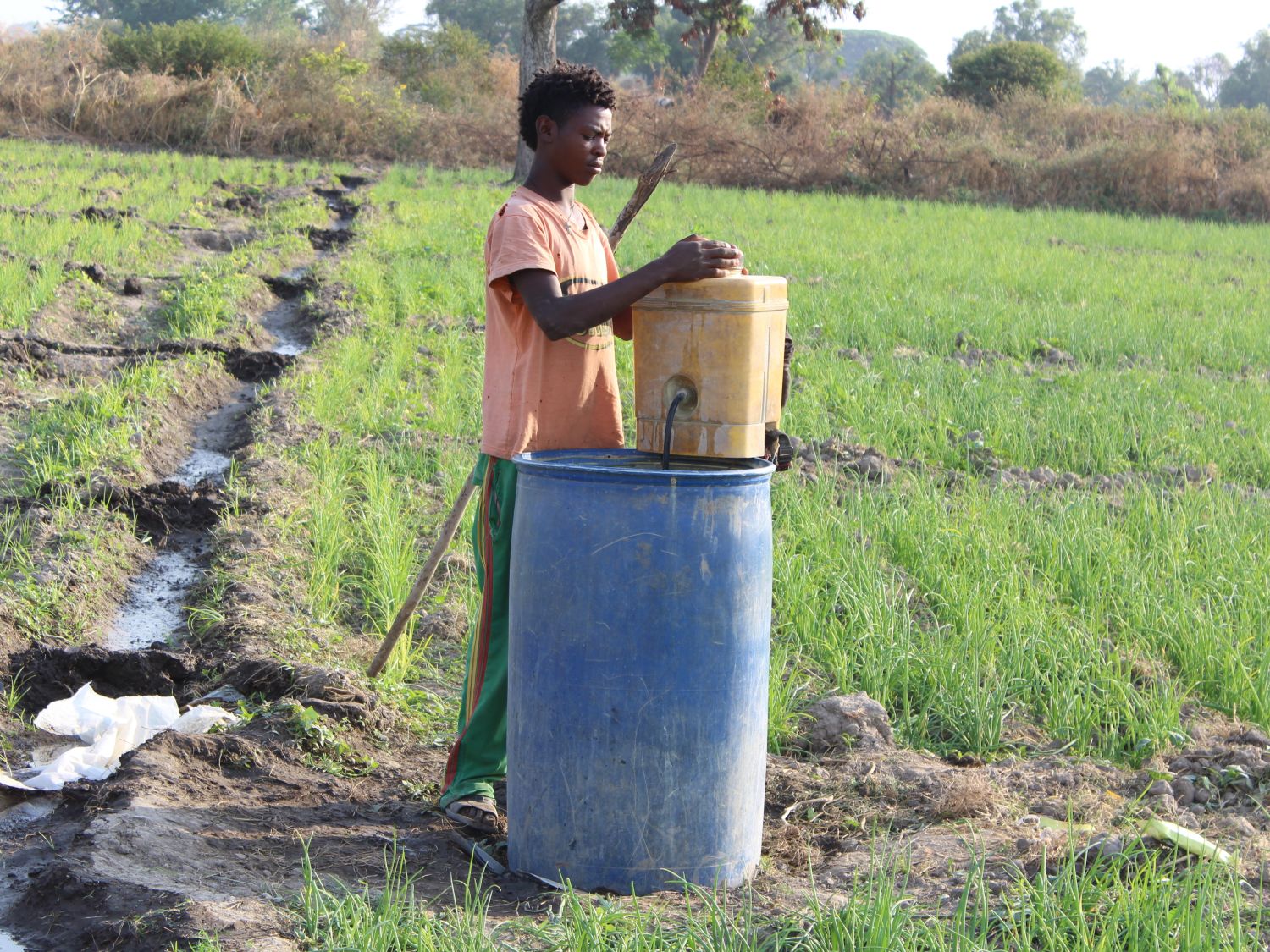
A new study published in Frontiers in Agronomy, has found that training farmers in agroecological practices helps to protect them from the harmful impacts of Highly Hazardous Pesticides (HHPs). It also increases their income. Over 700 vegetable farmers in Ethiopia’s Lake Ziway region took part in a programme to promote agroecology [...]

Unmasking Influence

2025-12-11T15:11:36+00:00December 11th, 2025|

Powerful commercial actors and the actions they take, affect us all, every day of our lives – many are undermining our health, our choices as individuals and the sustainability of the planet. They shape what we see, eat, and do. There is overwhelming evidence that the actions of many commercial [...]

The UK government’s new Environmental Improvement Plan – a gift to the pesticide industry

2025-12-04T10:19:19+00:00December 3rd, 2025|

The government’s long-awaited Environmental Improvement Plan (EIP) launched on 1st December. While those concerned with protecting human health and the natural environment will be bitterly disappointed, pesticide companies – and their associates in the industrial farming lobby – must be rubbing their hands with glee. Their lobbying is clearly working! [...]

Pesticides grab attention at UN climate talks in Brazil

2025-11-18T15:35:57+00:00November 18th, 2025|

An inflatable pesticides container the size of a 5-story apartment block calls for the phase out of Highly Hazardous Pesticides (HHPs) outside the venue of the COP30 climate negotiations in Belem, Brazil. It aims to highlight their role in heating the planet and poisoning the future. [...]

Professor Anthony Youdeowei (1937-2025)

2025-10-15T13:36:26+01:00October 15th, 2025|

We are sad to pass on news of the death of our long-term Trustee, Professor Anthony Youdeowei. Born in Nigeria in 1937, he qualified as an entomologist at the University of Ibadan, then in 1967 gained a PhD in Agricultural Entomology at the University of London. Returning to Nigeria, he [...]

Butterfly count reveals worrying results

2025-09-09T15:48:41+01:00September 9th, 2025|

The results of Butterfly Conservation’s Big Butterfly Count are in. The sunniest spring and hottest summer ever recorded in the UK provided good weather conditions for butterflies after 2024’s record-breaking lows. However, the results from the Big Butterfly Count show that it was definitely not a bumper summer for our beleaguered [...]

Why the pesticide industry’s influence on science and policy deserves more attention

2025-09-08T09:08:46+01:00September 8th, 2025|

by Dr May van Schalkwyk, a Research Fellow at the Centre for Pesticide Suicide Prevention and the Global Health Policy Unit at the University of Edinburgh. *Warning: This article discusses suicidal behaviour. If you have questions on self-harm or feel suicidal, use this link to find an international helpline.* The study of [...]

Pesticides impact on the nestlings of a farmland bird of prey

2025-08-13T14:37:39+01:00August 13th, 2025|

Synthetic pesticides used in conventional agriculture may have hazardous effects on wildlife. Still, most studies assessing the effects of pesticides are conducted under controlled conditions and include one to three different substances, neglecting the real exposure conditions of wild organisms to pesticide mixtures. In a recent study, we analysed the [...]

No-till’s massive pesticide problem

2025-08-08T09:15:36+01:00August 7th, 2025|

For years, no-till farming (the practice of reducing tillage and ploughing to protect soil fertility) has been promoted as a climate-friendly, soil-saving solution. It is marketed as a pillar of “regenerative agriculture” by the agrochemical industry and supported by major food companies. But a new report from Friends of the [...]

Gene by gene, organ by organ: Mapping pesticide damage across the bee body

2025-07-31T15:13:34+01:00July 31st, 2025|

by Alicja Witwicka, PhD  When it comes to pesticide toxicity, for years regulators have asked only one blunt question: how much pesticide kills a bee. The reasons why and how have been largely overlooked. Scientists have long warned that this “lethal dose” approach used in pesticide registration tests is dangerously [...]

354 tonnes of pesticides used in UK towns and cities in 2024

2025-07-30T15:57:36+01:00July 30th, 2025|

The results from the largest ever UK-wide survey on pesticide use by local authorities in public spaces launched today. It provides the most comprehensive picture of urban pesticide use by local councils in the UK to date. PAN UK received responses to Freedom of Information requests from 368 town, city, [...]

Pesticides found to reduce fish social behaviour

2025-07-22T12:22:24+01:00July 21st, 2025|

by Kyle Morrison, University of New South Wales In freshwater and marine ecosystems around the world, pesticides are silently shifting the ways in which fish socialise and interact. A recent study has analysed data from 37 experiments that tested the impacts of 31 different pesticides on 11 different fish species. [...]

Dorothy Myers (1936-2025): A founder of PAN UK

2025-07-16T11:29:00+01:00July 15th, 2025|

Written by Barbara Dinham, a long-time friend, colleague and former Director of PAN UK. Dorothy Myers, who died aged 88 in May 2025, was a pioneering environmentalist who played an influential role in pesticide policies over the last 40 years. She was a founder of Pesticide Action Network UK (established [...]

Meet PAN UK’s new Supermarkets Campaigner

2025-07-07T14:41:39+01:00July 7th, 2025|

Hello, I’m Ella, the ‘new’ Supermarkets Campaigner here at PAN UK. It’s been six months since I started this position – on one hand I can hardly believe it’s been that long and on the other it feels like I’ve been here forever. I remember the moment I got a [...]

Pesticide bans and why they work

2025-07-02T09:21:51+01:00July 2nd, 2025|

by Dr Bruna Rubbo, Research Fellow, University of Bristol *Warning: This article discusses suicidal behaviour. If you have questions on self-harm or feel suicidal, use this link to find an international helpline.* Having worked in the field of clinical and environmental epidemiology, and in pesticide exposure more specifically, I’ve long been interested in [...]

Look again at the flowers at your feet

2025-06-22T23:27:32+01:00June 22nd, 2025|

by Dr Trevor Dines As a botanist, I very much view the world from the roots up. In urban landscapes, I’m particularly obsessed with urban cliffs – or ‘walls’ as some people call them – where a multitude of ferns, mosses and flowering plants eke out a living in the [...]

Where the wild things grow

2025-06-12T08:44:40+01:00June 12th, 2025|

Council workers and contractors across the UK are currently spraying the weeds on our pavements, parks, playgrounds and other public green spaces with toxic herbicides. Author and artist, Anna Chapman Parker, provides us with a glimpse of the under-appreciated beauty being lost. Not only are pavement plants vital in supporting [...]

Hidden threats to hearing: pesticides can affect auditory health

2025-06-02T09:44:16+01:00June 2nd, 2025|

By Felipe Muñoz, Postdoctoral Researcher, Instituto de Ciencias de la Salud, Universidad de O'Higgins Recent research from our team at the Universidad de O'Higgins in Chile suggests concerning evidence that pesticide exposure could potentially affect hearing - even for those who simply live near agricultural areas. While previous studies have focused [...]

Go to Top