Last week, UN climate negotiations at COP31 concluded without adopting an overarching decision – the first UN climate summit to end without a deal since 2009. The close of the First International Conference of the Global Framework on Chemicals (GFC IC1) in Geneva was equally underwhelming. PAN’s environmental advocates are calling out the common denominator behind both failures: entrenched fossil fuel and agrochemical commercial interests backed by obstruction from petrostates.
Across both climate and chemicals summits, corporate lobbyists and major petrostates used consensus-based UN processes to veto meaningful action, gut accountability metrics, and starve global solutions of funding. The message is unmistakable: if fossil fuel exporters and the industries they shield refuse to act in good faith, they must get out of the way and let the rest of the world move forward.
Failures across climate change, synthetic chemicals (including pesticides) and plastics are not separate policy accidents; they all stem from oil and gas interests. As transport and power generation electrify and decarbonize, major oil companies and petrostates increasingly treat petrochemicals as their primary growth engine and they are going all out to protect that market. This is further exacerbated by a growing shift away from collaborative multilateralism and the increasing dominance of individual economic giants.
Two summits, one playbook of obstruction
At COP31, two weeks of talks ended without an agreed cover decision after allied fossil fuel exporters blocked any mention of transitioning away from oil, gas, and coal – the primary drivers of the climate crisis. Some developed countries also obstructed any efforts to clarify their obligations to provide public finance under Article 9.1 of the Paris Agreement, all the while pressuring developing countries to transition away from fossil fuels more quickly. Meanwhile, the United States, having abandoned the Paris Agreement and boycotted the summit altogether, left a massive void in public climate finance while continuing to expand fossil fuel production.
In Geneva, a similar dynamic played out at GFC IC1, with major agricultural chemical firms using countries to block progress on key decisions, particularly on pesticides. Because pesticides are overwhelmingly derived from fossil fuels, the agrochemical lobbies share the same playbook as Big Oil. Throughout the week, chemical industry representatives and aligned delegations worked to resist meaningful action on Highly Hazardous Pesticides (HHPs) and clashed with African nations as well as PAN and other civil society groups over meaningful indicators for toxic pesticide harms.
Lack of accountability
While commercial giants reap record profits from fossil fuels and synthetic chemicals, both UN frameworks remain crippled by the refusal of these companies to pay for the damage they cause. Instead, the rest of us pick up the bill through ill health, environmental harm and higher taxes.
- Climate finance: Developing countries require hundreds of billions of dollars annually to adapt to climate impacts—with global climate finance needs estimated at upwards of US$1.3 trillion per year—yet COP31 collapsed in part because major historical emitters like the U.S. refused to deliver on public finance commitments. The absence of predictable and accessible finance threatens efforts to strengthen resilience, protect livelihoods and respond to climate-related disasters.
- Chemicals finance: The Global Framework on Chemicals is starved of resources on an even more staggering scale. Across its first two funding rounds, the GFC Fund has committed just US$8.2 million across 23 countries, while the GFC Secretariat operated on only US$5.4 million in voluntary contributions from 2023 to 2026.
Defending action on Highly Hazardous Pesticides from industry pushback
Despite fierce attacks from agrochemical manufacturers and aligned delegations on health and exposure metrics, the PAN team did secure some hard-won steps forward: many governments and stakeholders reaffirmed plans to phase out Highly Hazardous Pesticides (HHPs) by 2035 and important indicators put forward by 54 African nations were kept on the table for further work. The Global Alliance on HHPs was also protected for another three years despite extremely strong efforts from the US and industry lobbyists to shackle it. Early GFC Fund grants to PAN in both West and East African countries have also started backing HHP regulatory reforms and safer agricultural alternatives in developing nations.
“The world is watching a handful of petrostates and corporate lobbyists hold human survival hostage,” said Manon Rouby, Co-coordinator, PAN International. The failure undermines the desire of many governments, particularly from developing nations, which attend with expectations that previous commitments will be translated into concrete action. The United States has walked away from its financial and moral responsibilities, while other developed countries continue to turn their obligation to provide climate finance into an endless conversation, and agrochemical giants are fighting tooth and nail to keep profiting from poisons. PAN continues to stand on the side of multilateralism.”
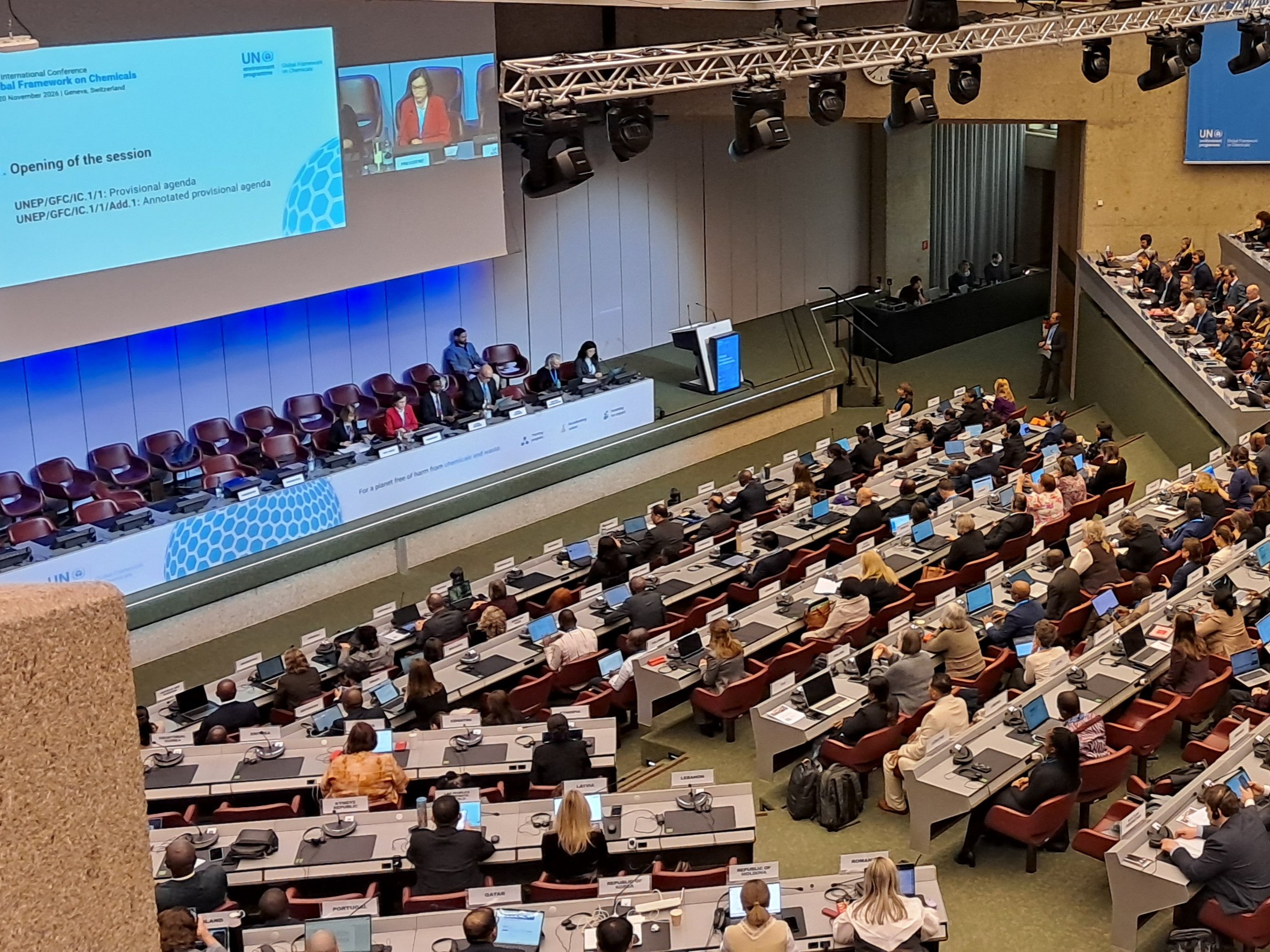
Plenary at the Global Framework on Chemicals 1st International Conference